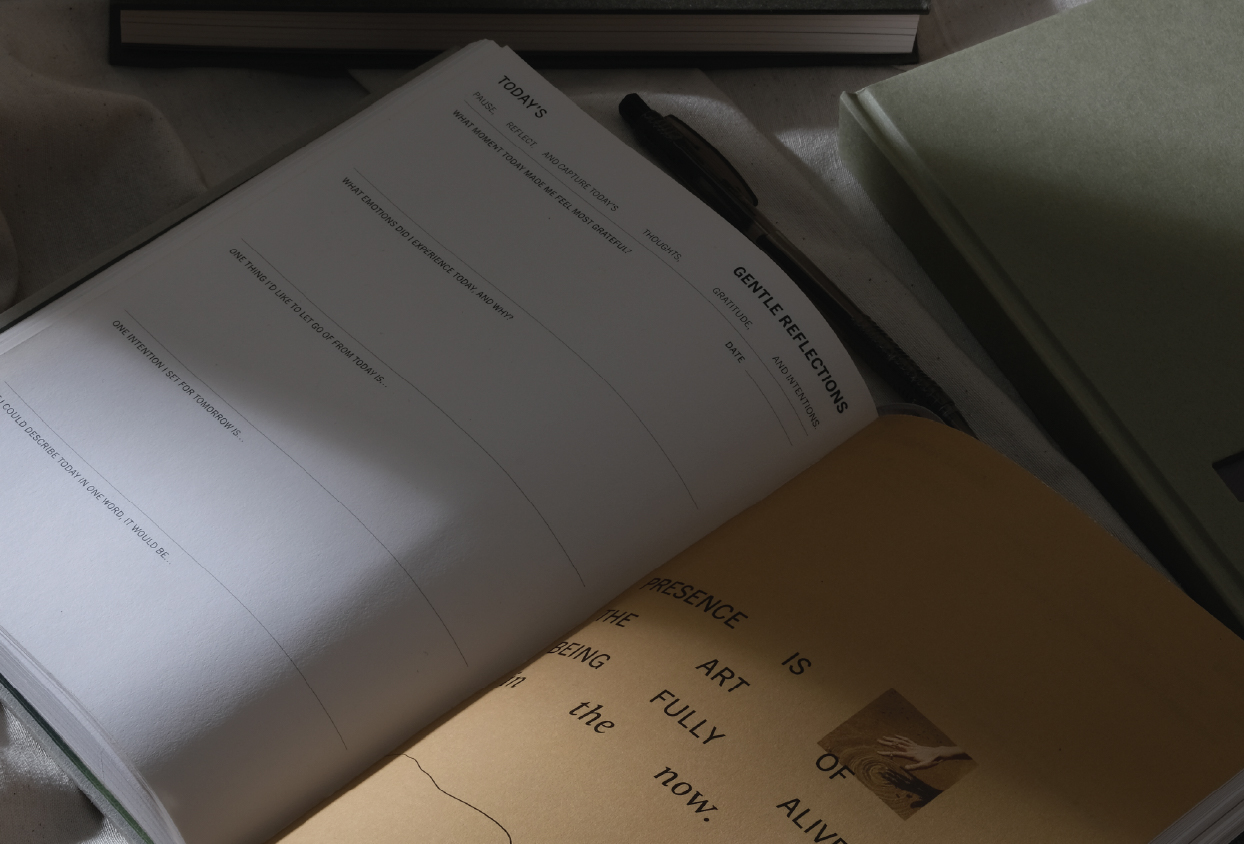

There are days when your mind feels crowded, your breathing short, and your emotions difficult to explain. You try to keep going, yet the weight in your head grows heavier. Journaling helps reduce that mental density, creates space to breathe, and gently untangles what once felt overwhelming.
Amid work pressure, relationship demands, and constant information flow, the mind rarely gets true rest. Many people wait for the “right” time to slow down, when in reality what they need is a small and consistent step. Writing, in a simple and honest way, can become the doorway to relief that is often forgotten.
Why Writing Helps the Mind Breathe
Writing transfers the burden from your head onto paper. When thoughts spin endlessly, putting them into words helps the brain process emotions in a more structured way. This creates distance between you and the problem, so feelings no longer feel as suffocating.
Psychologically, expressive writing can lower emotional intensity. Once emotions are acknowledged, the nervous system tends to settle. That is why journaling often feels like taking a deep breath after holding it for too long.
A Safe Space Without Judgment
One of the greatest strengths of journaling is its privacy. There is nothing to impress, nothing to perfect. Your writing does not need to be neat or beautiful. It only needs to be honest.
This safe space matters for a tired mind. Many people suppress emotions in order to appear strong. Journaling gives you permission to remove that mask, even if only for yourself. From that honesty, relief begins to emerge.
Read also: The Role of Journaling in Managing Emotions and Stress
When the Mind Is Too Noisy for Silence
Meditation is often recommended for calming the mind. For some, however, sitting in silence can make thoughts feel louder. Journaling offers a more active alternative. Instead of forcing stillness, you allow your thoughts to speak.
By writing freely, you follow the flow of your mind without judgment. As the words unfold, the internal noise gradually finds rhythm. Many people end a journaling session with a lighter head and steadier breath.
Naming Emotions to Understand Them
Emotions that are not expressed often find other ways to surface. They may appear as irritability, anxiety, or lingering fatigue. Journaling helps you name those emotions.
Once emotions are identified, they become easier to understand and respond to wisely rather than reactively. This process is essential for long term mental well being.
Journaling and Self Awareness
Writing regularly increases self awareness. You begin to notice thought patterns, stress triggers, and unmet needs. This awareness allows you to make decisions that align more closely with who you truly are.
In the context of writing to breathe and using journaling to release mental burden, self awareness grows naturally through the process. It is not a forced outcome, but a steady development over time.
Finding the Right Time to Journal
There is no correct schedule. Some people write in the morning to set intention. Others prefer the evening to release the weight of the day. What matters most is choosing a time that feels natural for you.
Journaling does not have to be lengthy. A few focused minutes can be more powerful than a long session that feels forced. Consistency matters more than duration.
Overcoming Writer’s Block
Feeling stuck is part of the process. When words do not come easily, you do not need to push. Writing about the block itself often opens the door.
Remember that journaling is about the act, not the result. Each sentence is a gesture of care toward yourself. Through that care, your mind gradually relearns how to breathe.
Read also: Types of Journaling Gratitude Goal and Reflective Journal
Journaling as a Self Care Ritual
Journaling becomes more powerful when treated as a ritual. Rituals provide structure and a sense of safety. When you intentionally set aside time to write, you send a message to yourself that your mental well being matters.
The ritual does not need to be elaborate. Presence and intention are enough. When integrated into your routine, journaling supports emotional balance during daily stress.
Combining Journaling With Body Care
Writing and physical self care complement each other. When the body is relaxed, the mind opens more easily. After journaling, many people notice that their body feels lighter as well.
A holistic approach supports deeper restoration. At Aarti Wellness, wellness experiences are designed to nurture both body and mind. Many individuals find that journaling after a treatment allows them to process emotions with greater clarity and calm.
Read also: The Role of Journaling for Managing Negative Thoughts and Emotions
Journaling as a Long Term Investment in Mental Health
Writing for yourself is a long term investment. It may not always produce dramatic results, but its impact is steady and lasting. Over time, journaling helps you recognize limits, care for emotions, and maintain mental clarity under pressure.
In a world that demands speed, journaling teaches you to slow down. Slowing down does not mean falling behind. It means giving yourself the space to breathe and continue with awareness.
Breathing Through Words
When your mind feels crowded, words can offer a gentle and safe release. If pressure is making your breath feel tight, try writing without any goal other than honesty. Let the words carry the burden out of your head and create space for calm.
Complete this ritual with nurturing self care at Aarti Wellness, allowing both your body and mind the opportunity to breathe, reset, and restore.