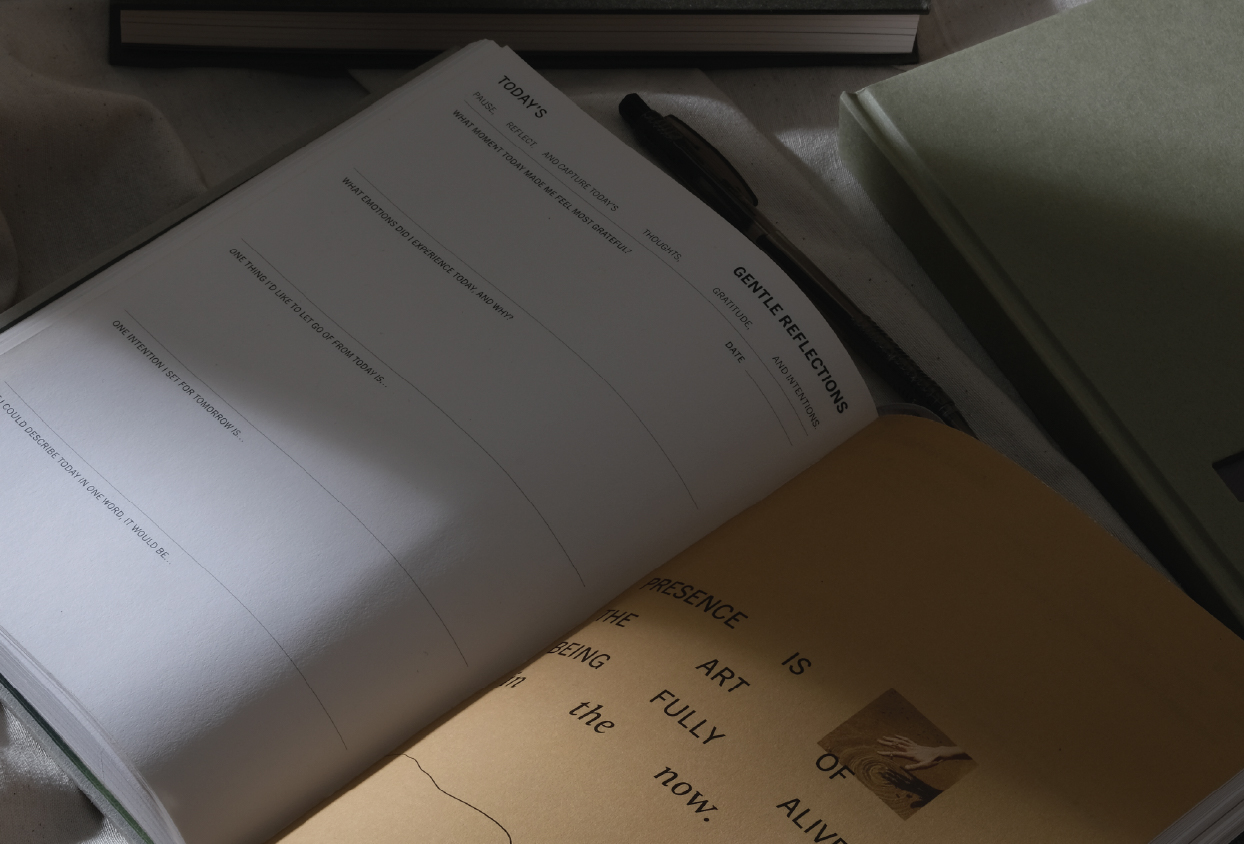
In a world filled with noise, expectations, and constant demands, one conversation is often neglected. It happens without witnesses, without judgment, and without masks. Journaling is not about writing beautifully or perfectly. It is about creating space for the inner voice that rarely gets heard. When words flow onto paper, you begin the most sincere dialogue with yourself.
Many people are used to speaking to the outside world but forget to listen to what they truly feel. Thoughts pile up, emotions blend together, and exhaustion slowly becomes normal. Journaling offers a gentle pause. It invites you to stop, breathe, and ask honestly what you are actually experiencing.
Why Honesty with Yourself Matters
Self honesty is the foundation of mental well being. Without it, emotions tend to be suppressed or denied. Over time, stress and anxiety surface without clear explanation. Journaling helps break that cycle in a safe and personal way.
When you write, you do not need to filter your words for others. You only need to be truthful. From that honesty, relief begins to emerge. Thoughts that once felt overwhelming start to take shape, making them easier to understand and manage.
Journaling as a Mirror of Emotion
Writing often reveals what has not yet been acknowledged. In journaling, vague emotions become clearer. Feelings that once felt confusing begin to take on names. This process helps you recognize what you truly need.
Once emotions are identified, responses become healthier. Instead of reacting impulsively, you respond with awareness. This is why journaling is widely valued as a powerful self reflection practice.
Read also: The Role of Journaling in Managing Emotions and Stress
A Conversation Without Masks or Expectations
In social life, you often adapt. You play roles and maintain certain images. Journaling frees you from all of that. On the page, you do not have to be your best version. You only have to be yourself.
This conversation does not demand instant solutions. It asks only for presence and honesty. From that space, clarity often emerges naturally.
Organizing Scattered Thoughts
Unstructured thoughts are exhausting. Journaling helps arrange mental chaos into coherent sentences. By writing, you transfer the burden from your head onto paper.
This process creates distance between you and the issue. That distance allows you to view situations more objectively. As a result, your mind feels lighter and focus begins to return.
Journaling and Self Awareness
Self awareness does not appear overnight. It grows through consistent reflection. Journaling is one of the simplest ways to cultivate that awareness.
Through writing, you begin to notice patterns. What frequently drains you, what triggers anxiety, and what truly energizes you. This understanding helps you make choices aligned with your values and personal needs.
Read also: Types of Journaling Gratitude Goal and Reflective Journal
When Journaling Becomes Healing
Writing is not always comfortable. At times, heavy emotions surface. Yet this is often where healing begins. By facing feelings gradually and safely, you allow yourself space to recover.
Journaling does not replace professional support, but it can be a strong companion in your mental health journey. It keeps you connected to yourself, especially during challenging times.
Consistency Over Technique
There are no strict rules in journaling. You do not need a specific format or daily schedule. What matters most is consistency that feels realistic for you.
A few honest sentences can be more meaningful than pages written out of obligation. Journaling is about presence, not performance. When practiced with intention, it becomes a calming and liberating conversation.
Pairing Journaling with Self Care Rituals
Self conversation deepens when the body is relaxed. Combining journaling with a self care ritual creates a supportive environment for reflection.
When the body is nurtured, the nervous system settles. In that calm state, the mind opens more honestly. At Aarti Wellness, experiences are designed to support balance between body and mind. Many find that journaling after a treatment helps them process emotions with greater clarity and gentleness.
Journaling as an Act of Self Respect
Taking time to write is an expression of self respect. You acknowledge that your thoughts and feelings deserve attention. In the midst of life’s pressures, this mindset becomes essential.
Through journaling, you do not wait for external validation. You learn to recognize and honor yourself. This is a powerful form of emotional maturity.
Read also: The Role of Journaling for Managing Negative Thoughts and Emotions
Letting Words Become Companions
In journaling, words are more than symbols. They become companions in the process of understanding yourself. Some days they feel heavy, other days they flow easily. Both experiences are valid.
By accepting the process as it is, journaling becomes an ongoing dialogue that grows as you grow.
Listening to Yourself Through Writing
If your thoughts feel increasingly loud and your emotions difficult to untangle, try writing with no goal other than honesty. Let your journal become a safe space for heart to heart conversation with yourself.
Complete this reflective moment with calming self care at Aarti Wellness, allowing your body and mind to reconnect in a more balanced and grounded way.